Saturday, May 21, 2016

Silapathikaram

Silapathikaram by Illango Adigalar is a classic epic in Tamil covering the three great south Indian empires of Cholas, Cheras and Pandyas. I picked out a few of my favorite verses  from this epic and tried to compose them into paintings.


This painting is  depiction of the verse 'Vadavaraiyai matthaakki vasukiyai naanaakki'. made famous by M.S. Subbalakshmi who sang this song frequently in her concerts. The song is sung in the epic by a group of girls who dance together for entertaining Kannagi when Kovalan goes to sell the anklet. This narrates the churning of the ocean episode and extols the virtues of Lord Krishna.The painting contains Vasuki, the serpent whose head is held by asuras and the tail by the devas while churning the ocean, the seven dancing girls in Silapathikkaram representing the saptha swaras, the climax in the epic where the two anklets are broken, one scattering pearls and the other rubies.

A link to the song :  http://gaana.com/song/vadavarayai-m-s-subbulakshmi

  Another part of the same poem


A description of Madhavi


 Preaching of Buddha in Silapathikaram

Saturday, April 2, 2016

KALAMKARI ART

'Kalam' refers to pen and 'kari' refers to an artisan. Kalamkari is an art form from Andhra using natural dyes drawn into shapes using a hand made pen called the kalam. The cloth is first processed in milk and nutmeg to absorb colors and after the painting is done using the kalam and various natural dyes, the cloth is boiled in water with added ingredients to bring out the actual colors. The colors, if mixed properly, are bright and beautiful. But the success of the painting depends on the preparation of the dyes. Even a minute fault like dipping the kalam for the red color in the blue dye can spoil the outcome and make the painting dull and lifeless.


My teacher sketching a typical kalamkari design


Kalamkari work after painting with the kalam and before washing for the colors.


Natural dyes on cloth

Thursday, March 31, 2016

Painting on Marble

I never thought marble would be such an excellent surface to paint. The smoothness of the surface and the soft white color and the hardness of the material makes it an ideal surface for miniatures. Delicate lines appear with amazing clarity and it is a joy to paint on marble albeit expensive. A copy work done to illustrate jewellery design in my college exam.

Mughal King - Poster colors on marble

Tuesday, March 15, 2016

KALIGHAT PAINTING - Sabari Moksham

Kalighat painting originated in West Bengal and is comparatively a more recent art form of India. It originated in the 19th century in Kolkata and painters were found to practice this style in the vicinity of the Kali temple. Paintings mostly depict Hindu Mythology but we also find an array of contemporary themes in this style.


This painting was done to design props on the dance stage. Importance has been given to props - trees, hut, Rama's seat, bows and arrows.

Thursday, February 11, 2016

MADHUBANI PAINTING - Hanuman meeting Sita in Lanka

Madhubani paintings also called as Mithila paintings originated from Bihar. It was originally done on Mud walls or floors of houses. Now madhubani art is found everywhere from wall murals to sarees, tea coasters and handbags and so on. The colors are bright and the sketching has a childlike quality which makes this art form an attractive option to learn and paint.


This painting is based on the event in Ramayana where Hanuman meets Sita and gives her Rama's ring. A painting of an event which signifies hope and success in the epic. Painting on handmade paper using powder colors

Tuesday, December 1, 2015

LEPAKSHI ART - RISHABARUDA

Lepakshi art belongs to the Vijayanagar school of painting. The Vijayanagar school of painting is renowned for its frescoes of Hindu gods and goddesses and scenes from Hindu mythology on temple walls and ceilings created to initiate a Hindu renaissance. Absorbing the local artistic traditions and customs, the Vijayanagar school of painting gradually evolved into many styles of painting in South India, including the Mysore and Tanjore schools of painting. Vijayanagar painting is most commonly represented in elaborate manuscripts and wall paintings in Hindu temples.


Here I have attemped a Lepakshi style Shiva and Parvathi on the Rishaba  (Called in Hindu Iconography as Rishabaruda) decorated with arches and temple domes typically resembling the Vijayanagar and Nayak style paintings. The textile designs used in these paintings are very popular even now. The border at the bottom of the painting also is a textile design created in that era.

Thursday, October 1, 2015

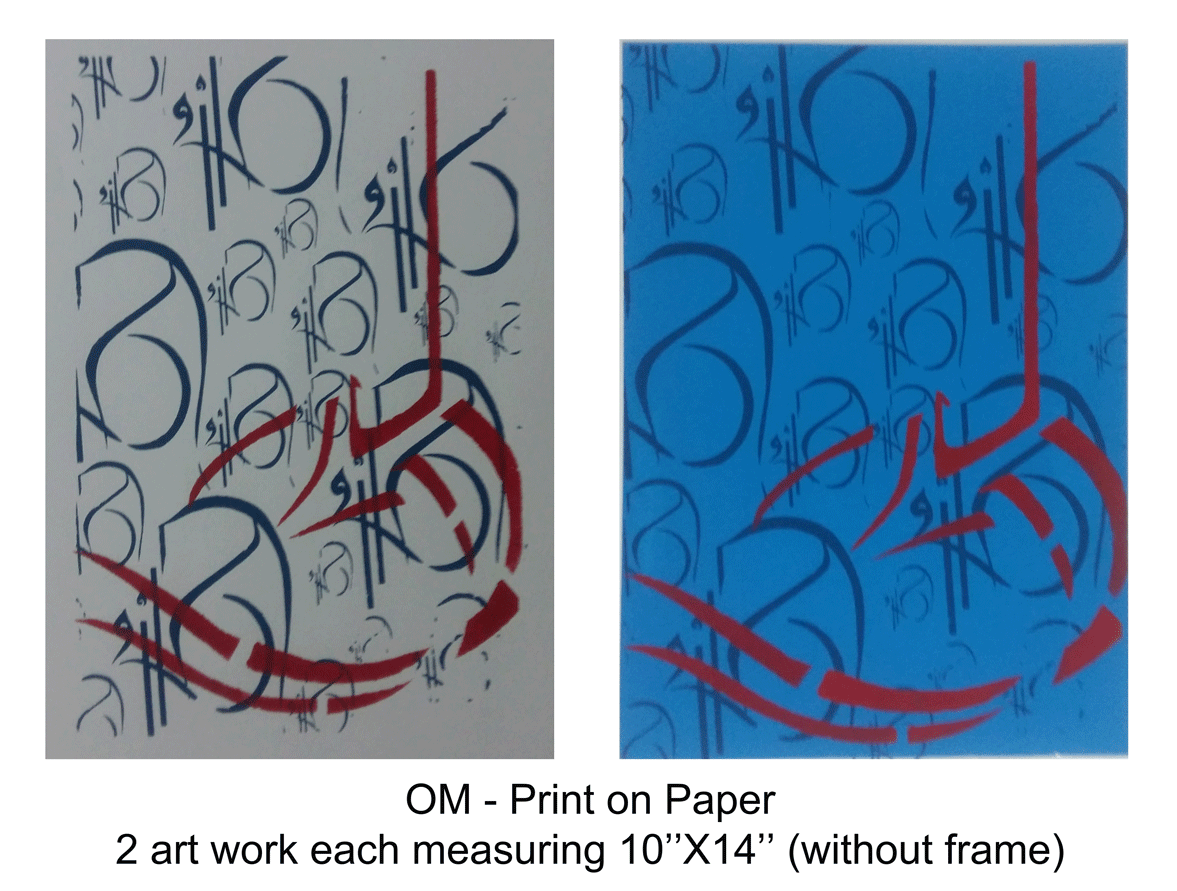
PRINT MAKING

My attempts at Printmaking


Bamboo - Stencil

Face - Woodcut

Silk Screen Print - Sketched from photo

Bamboo - Stencil

Stencil and design on board with acrylic colors

Entanglement - Dry Point Etching

Lotuses - Acid Etching on Zinc plate

Lotuses - Acid Etching on Zinc plate

Lino cut - Shiva with vilwa leaves & Dhara